Ghost Menus and Accidental Classics: Reading the Usage Data Product Teams Refuse to See
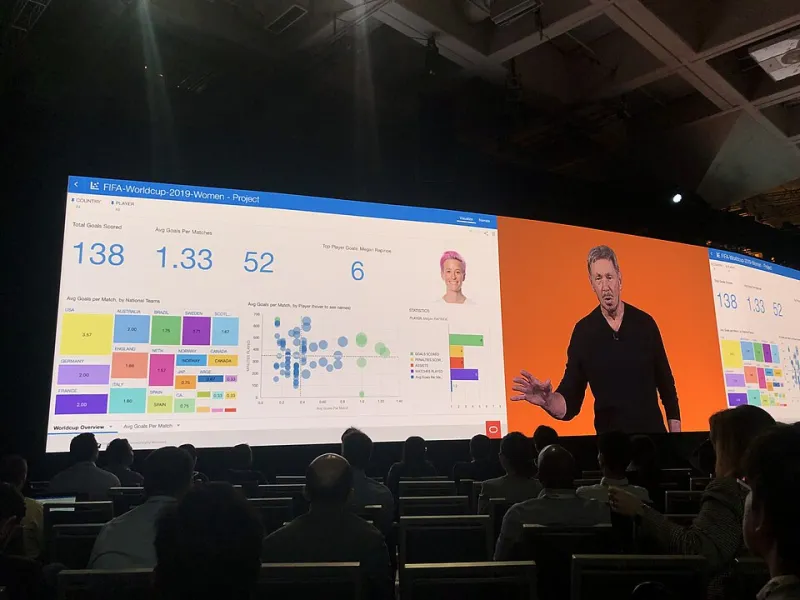
Photo: GeneralAB13, CC BY-SA 4.0, via Wikimedia Commons
Somewhere in the average American SaaS company's analytics dashboard sits a feature that consumed an entire quarter of engineering time and now registers fewer daily sessions than the password reset page. Meanwhile, a minor utility — built in a single sprint, mentioned once in a changelog — has quietly become the reason a segment of customers renew their contracts.
Product teams rarely talk about this inversion, but the data always knows. The question is whether anyone is listening.
The Launch That Nobody Attended
Feature launches follow a familiar script: the announcement email, the blog post, the celebratory release notes. What follows less often is an honest accounting. Analytics teardowns across the industry reveal a stubborn pattern — a meaningful share of shipped functionality never achieves sustained adoption. Users click once, shrug, and return to the three workflows that actually pay the bills.
The reasons are rarely about quality. More often, the feature solved a problem the roadmap believed customers had, rather than one customers demonstrably exhibited. Internal conviction replaced behavioral evidence. In a market where the median software buyer evaluates a dozen tools before committing, that gap between assumption and reality compounds quietly, release after release.
The Accidental Power Tool
The inverse phenomenon deserves just as much attention. Support tickets and community forums are full of users who have repurposed obscure settings into core workflows — the custom field that became a project management system, the export button that doubled as a reporting suite. These adoptions happen without marketing support, without documentation, and frequently without the product team's awareness.
Companies that mine this behavior find something valuable: evidence of unmet demand already living inside their own product. A workflow users invent themselves is a roadmap suggestion with receipts attached. Yet most analytics reviews focus on funnel drop-off and activation rates, not on the strange corners where engagement quietly spikes.
Why Roadmaps Misread Their Own Customers
Several forces conspire to keep teams blind. Roadmaps are often committed months in advance, making mid-course correction politically expensive. Stakeholder requests — the loudest customer, the largest account — carry outsized weight compared to the silent majority whose behavior never surfaces in a meeting. And usage data, when reviewed at all, tends to be skimmed for vanity metrics rather than interrogated for surprises.
There is also a cultural component. Teams celebrate what they ship, not what users keep. A feature abandoned by its audience represents an uncomfortable conversation; a new launch represents a milestone. Over time, this asymmetry teaches organizations to reward output over outcomes.
Hunting for Surprise Adoption
The strongest product organizations flip the review. Rather than asking whether a feature hit its adoption target, they ask a different question: what are users doing that we never expected? Practical methods include:
- Cohort analysis on unexpected surfaces — tracking which low-profile tools retain users best over ninety days.
- Session replay and support ticket mining — looking for repeated workarounds that signal missing capability.
- Churn interviews focused on behavior, not opinions — asking departing customers what they actually used, not what they wished existed.
- Feature pairing analysis — discovering when two supposedly separate functions are used together in patterns the roadmap never anticipated.
These techniques cost little. What they require is a willingness to let the data embarrass the roadmap occasionally.
Shipping Less, Learning More
None of this argues for building less. It argues for building with a shorter feedback loop and a humbler posture toward one's own predictions. The teams that consistently outperform treat every release as a hypothesis, and treat the features users ignore — or unexpectedly love — as the most honest product research money can buy.
The sidebar ghosts and the accidental classics are both messages from the customer. One says nobody needed this. The other says you haven't noticed what we actually value. Software teams that learn to read both will find their next roadmap already written — in the usage logs they've been overlooking all along.